


1905-1906 Khasi Revival
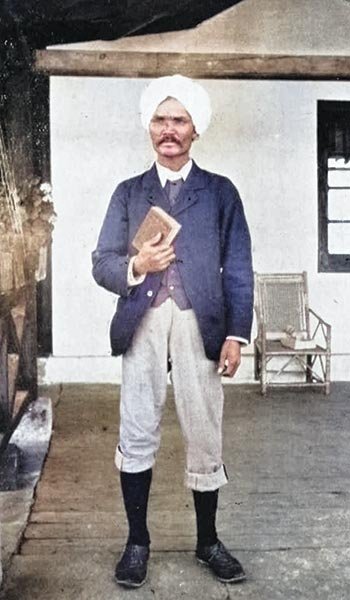
Rev Amirka (Rangtong)
Introduction
Rev Amirka (Rangtong)
The Khasi Hills Revival of 1905-1906 was not an isolated incident of religious fervour but a pivotal event within a global chain of spiritual awakenings that characterized the early 20th century. It stands as a key “flashpoint” alongside movements in Wales (1904), Mukti in India (1905), Azusa Street in Los Angeles (1906), and Pyongyang in Korea (1907), forming a network of intense, transnational religious phenomena.1
Within Northeast India, the revival was a watershed moment, fundamentally reshaping the region’s religious and cultural landscape. It acted as the direct catalyst for subsequent movements, most notably the Mizo Revival of 1906, and was instrumental in cementing a distinctly Christian identity for many of the region’s peoples.5
This report argues that the 1905-1906 Khasi Hills Revival was a complex socio-religious conflagration, ignited by the transnational spark of the Welsh Revival but fuelled by decades of local missionary groundwork, the socio-cultural anxieties of a Khasi society grappling with colonialism, and a pre-existing indigenous spiritual ferment.
It was not merely a process of conversion but a profound re-negotiation of Khasi identity, which simultaneously accelerated Christianization and catalyzed organized cultural preservation movements in response.
I. The Khasi Hills on the Eve of Revival: A Society in Transition
The spiritual fire that swept the Khasi Hills in 1905 erupted in a society already undergoing profound transformation. The region was not a passive recipient of a foreign religious movement but a dynamic cultural landscape where indigenous traditions, colonial pressures, and Christian missionary efforts had created a fertile ground for radical change.
The Indigenous Bedrock: Niam Khasi and Matrilineal Society
Before the arrival of the British or Christian missionaries, Khasi society was anchored by a sophisticated indigenous religious and social system. The traditional faith, Niam Khasi, was a monotheistic belief in a creator God, U Blei Nongthaw, whose tenets were passed down through a rich oral tradition.7
It was understood not as a static set of doctrines but as a Niam, a “living covenant” or reason, that was dynamic and deeply interwoven with every aspect of life, from agricultural rituals to social ethics.7
This faith was inseparable from the unique matrilineal social structure of the Khasis. In this system, lineage, inheritance of property, and clan identity were traced through the female line.9 This structure conferred significant social and religious authority upon women, a reality that would later come into direct tension with the patriarchal norms introduced by both the British administration and the Christian missions.12
The Colonial Imposition and Its Discontents
The British penetration into the Khasi Hills, beginning in the early 19th century and consolidated after the Treaty of Yandaboo in 1826, marked the first major disruption of traditional Khasi life.13 This imposition of external political control was not met without resistance. The Khasi Uprising of 1830-33, led by the chief Tirot Sing, was a fierce, albeit ultimately unsuccessful, attempt to resist British road construction and encroachment on Khasi autonomy.15
Though suppressed, the uprising became an enduring symbol of Khasi defiance and cultural preservation.15 The subsequent establishment of Shillong as a major administrative center and capital of Assam further accelerated change, creating new economic opportunities and forcing greater interaction with outsiders, which in turn led many to question age-old traditions.9
This combination of political subjugation and rapid socio-economic change created a “double disruption.” The British challenged Khasi political autonomy, while the new urban economy began to alter traditional ways of life. This created a deep-seated societal anxiety and an identity crisis, as the foundational certainties of Khasi life were being eroded from multiple directions.
This state of flux produced a spiritual and psychological vacuum, making the population more receptive to a powerful new system of meaning that could offer stability and purpose in a rapidly changing world.
The Missionary Advance: Sowing the Seeds (1813-1904)
The second major disruption came from Christian missionaries. The first efforts were made by the Serampore Baptist Mission, which sent Krishna Pal to the region in 1813.7 While his work was short-lived, it resulted in the first translation of the New Testament into Khasi, albeit using the Bengali script, a crucial first step in creating a Khasi literary tradition.7
The decisive turning point was the arrival of Thomas Jones of the Welsh Calvinistic Methodist Mission (later the Welsh Presbyterian Mission) in 1841.13 Jones’s impact was monumental. He developed a script for the Khasi language using the Roman alphabet, an innovation that earned him the title “father of the Khasi alphabet” and laid the foundation for all modern Khasi literature.19
This act was transformative; it gave a preliterate people a written language, allowing them direct access to the Christian scriptures and fostering a new literate class. Jones and his successors also established the first schools and churches, including the Nongsawlia Presbyterian Church, creating the institutional and social network through which the revival would later spread with remarkable speed.9
Crucially, the Welsh mission was itself a product of revival. The Welsh Calvinistic Methodist movement was born out of the 18th-century Welsh Methodist Revival, a tradition characterized by Calvinist theology, an emphasis on intense personal devotion, and a history of powerful, emotional spiritual awakenings.22 This “revivalist DNA” was embedded in the mission’s culture.
They were not simply building a church; they were ideologically and spiritually predisposed to expect, pray for, and cultivate the very kind of mass spiritual movement that would erupt in 1905. The groundwork they laid over sixty years was not just institutional but deeply spiritual, programming the mission for revival.
Currents of Resistance and Reform
The missionary project was not passively accepted. It spurred a vibrant intellectual and religious response from within Khasi society, creating a dynamic “marketplace of ideas” where Khasis were actively debating and forging new ways to be modern.
- The Seng Khasi Movement (1899): Founded by educated Khasi elites like Jeebon Roy, this was a cultural and religious “renaissance” movement. It aimed to preserve and codify the tenets of Niam Khasi in the face of the perceived onslaught of Westernization and Christianity, offering a path to modernity rooted in revitalized indigenous tradition.12
- The Unitarian Movement (1887): Led by Hajom Kissor Singh, this movement represented a Khasi-led reformation of Christianity itself. As a breakaway from the Welsh mission, it challenged the Trinitarian orthodoxy of the missionaries and sought to create a more liberal, rational faith that harmonized with Khasi thought, offering yet another distinct path to a modern Khasi identity.9
- The Khasi Hills Revival of 1905 did not, therefore, enter a vacuum. It exploded into this pre-existing, vibrant debate about the future of Khasi identity. Its overwhelming success would dramatically shift the balance of this marketplace, making the Presbyterian model the dominant expression of what it meant to be a modern Khasi for the next century.
II. The Welsh Connection: A Transnational Catalyst
The Khasi Hills Revival was ignited by a spark from half a world away. The direct causal link between the 1904-1905 Welsh Revival and the events in the Khasi Hills is one of the clearest examples of transnational religious transmission in the modern era, demonstrating how ideas and spiritual fervour could travel through the networks of empire and mission.
The 1904-1905 Welsh Revival: The Epicenter
The revival in Wales, which began in late 1904 under the leadership of figures like Joseph Jenkins and the charismatic young Evan Roberts, was a phenomenon that captivated the Protestant world.27 It was not a movement based on powerful preaching but on participatory spiritual expression.
Its key characteristics—spontaneous prayer, public and emotional confession of sin, the central role of hymn singing, and intense, often supernatural experiences—would all be mirrored with remarkable fidelity in the Khasi Hills.27
Channels of Influence: How the Fire Crossed the Seas
The connection between Wales and the Khasi Hills was direct and familial. The Khasi Presbyterian Church was a mission of the Welsh church, and they saw themselves as part of the “same church”.29 This relationship provided the channels through which the revival’s influence flowed.
- The Written Word: The primary vector of transmission was correspondence. Weekly mail brought letters from home to the Welsh missionaries, describing the events in Wales with such passion that it created a “hunger and a thirst for God” among them.29 These accounts, along with printed leaflets, were shared with the Khasi Christians, filling them with faith that the same spiritual outpouring could happen in their land.18
- Personal Connection: The link was made tangible through personal visits. In February 1905, two ministers from Wales attended the Khasi Hills General Assembly, bringing the spirit of the revival with them.5 Missionaries returning from furlough in Wales also provided powerful, first-hand reports of what they had witnessed.30
- The response in the Khasi Hills was not one of mere imitation but of claiming a spiritual inheritance. Because the Khasi church was the “daughter” of the Welsh “mother” church, the news was received as a family matter. Their prayers were not for a revival like the one in Wales, but for the revival happening in their church in Wales to manifest in their church in the Khasi Hills.
This sense of entitlement to the same blessing explains the confidence and fervor of their prayers.
The Groundwork of Prayer (1902-1905): Preparing the Soil
The ground in the Khasi Hills was exceptionally well-prepared to receive this news. An organized prayer movement for revival predated the events in Wales, functioning as a “technology of anticipation” that created a shared emotional and spiritual state of hyper-receptivity.
- Early Stirrings: As early as 1902, two missionary women, inspired by a message on the power of prayer, returned to the hills and made it their central theme.18 By early 1903, the church in Mawphlang had instituted weekly Monday night prayer meetings with the specific goal of praying for a “great outpouring of the Holy Spirit”.18
- Intensification: The news from Wales at the end of 1904 did not create this desire for revival but gave a tangible form and an imminent timeline to a hope that was already being actively cultivated. The prayer movement intensified dramatically. By the beginning of 1905, prayer meetings were being held every single night, with believers waiting for the “promised outpouring”.18
The Presbyterian General Assembly in Cherrapunjee in February 1905 was charged with an almost unbearable sense of expectation.18 The revival, when it finally came, was thus perceived as a direct and immediate answer to these specific, sustained prayers, validating the entire process.
III. The Outpouring: A Chronology and Geography of the Revival (1905-1906)
The pent-up spiritual anticipation in the Khasi Hills finally broke forth in the spring of 1905, initiating a two-year period of intense religious activity that spread with astonishing speed. The revival’s progression can be traced through a series of key events and locations, following the institutional and social networks established by the Presbyterian mission.
The following table provides a chronological scaffold of the revival’s key moments, illustrating its rapid expansion from a single prayer to a region-wide movement.
Table 1: Timeline of Key Events in the Khasi Hills Revival (1905-1906)
| Date | Location | Key Event/Significance | Key Figures/Groups | Source(s) |
| Early 1903 | Mawphlang | Start of weekly Monday prayer meetings for revival. | Local Church, Missionaries | 18 |
| Feb 1905 | Cherrapunjee | Annual Presbyterian General Assembly; heightened expectation. | Welsh & Khasi Ministers | 18 |
| Mar 19, 1905 | Pariong | Official start of the revival. Spontaneous prayer erupts at the close of a service. | Unnamed Khasi man | 18 |
| Mar 25, 1905 | Nongsawlia | “The fire fell” during an afternoon service; intense emotional manifestations. | Khasi evangelist from Pariong | 18 |
| Apr 1, 1905 | Shillong | Revival breaks out during an evening prayer meeting. | Unnamed church member | 18 |
| May 8, 1905 | Jowai | Revival begins, notably among children and young people. | San Suki, unnamed boys | 18 |
| Mar 16-19, 1906 | Mairang | Second annual assembly during the revival; 8,000-10,000 attend. A major consolidation point and catalyst for wider spread. | Mizo delegation attends | 5 |
| Apr 9, 1906 | On the way to Aizawl | The Mizo delegation experiences an outpouring of the Spirit, marking the direct transmission of the revival to the Lushai Hills. | Mizo delegates | 6 |
The Spark in Pariong (March 19, 1905)
The revival began not with a sermon or a planned event, but with a single, spontaneous prayer. At the close of the Sunday service in the village of Pariong, an unnamed Khasi man, feeling a sense of disappointment that the anticipated blessing had not yet arrived, stood and prayed aloud: “O God, pour down Thy Spirit upon us all now; whilst Thou art blessing the people of Wales so much, do not send us away empty”.18
This heartfelt plea acted as a trigger. Immediately, others began to pray simultaneously, and the service dissolved into what observers described as “holy confusion,” with widespread weeping, crying for mercy, fainting, and ecstatic praise.18
The Spreading Flame (March – May 1905)
The revival’s rapid geographical spread was not random but logistical, flowing through the pre-existing channels of the Presbyterian church network. A Khasi evangelist who witnessed the events in Pariong carried the news to Nongsawlia, the historic heart of the mission, where on March 25th, the “fire fell” with similar intensity.18
On April 1st, the revival reached the administrative capital of Shillong, erupting during a prayer meeting led by a “not very prominent member,” a fact that underscored the grassroots, lay-driven nature of the movement.33 In May, the revival broke out in Jowai, where it took on a distinct character, beginning powerfully among children whose testimonies and prayers were instrumental in converting their peers and elders.18
The Mairang Assembly (March 1906): A Moment of Consolidation
The annual Presbyterian assembly held in Mairang in March 1906 became a massive revival meeting, drawing an estimated 8,000 to 10,000 people from across the hills.18 This event served to consolidate the movement, unifying believers and intensifying the spiritual fervor across the entire region. More significantly, the Mairang assembly functioned as a pivotal, trans-ethnic Pentecostal event for Northeast India.
A delegation of ten Mizo (then known as Lushai) Christians had traveled for two weeks through the jungle to attend.5 At Mairang, they were “infected with the spirit of revivalism” and received a formal blessing from the thousands-strong congregation.5
On their journey home, they experienced their own outpouring of the Spirit, and upon reaching the Lushai Hills, they ignited the 1906 Mizo Revival, marking the moment the Khasi revival crossed a major ethnic and linguistic boundary and became a regional phenomenon.5
Geographical Trajectory
From its starting point in Pariong, the revival swept through the Khasi and Jaintia Hills, touching at least 49 distinct villages and cities.18 Its path followed the network of churches, schools, and mission stations the Welsh had painstakingly built over the previous sixty years.
From this Khasi heartland, the movement’s influence radiated outwards, spreading to the neighboring states of Mizoram, Assam, Manipur, and Tripura, making it a foundational event for the Christianization of the entire Northeast Indian region.3
IV. Anatomy of an Awakening: Characteristic Phenomena and Experiences
The Khasi Hills Revival was defined by intense, embodied, and often supernatural experiences that temporarily superseded conventional church order. Analyzing these phenomena provides insight into how participants experienced the divine and how the movement generated such powerful momentum. The revival was a multi-sensory event, engaging participants through sound, physical sensation, and visionary experience.
The following table categorizes the diverse phenomena reported during the revival, providing a structured overview of its experiential character.
Table 2: Reported Phenomena of the Khasi Hills Revival
| Category | Phenomenon | Description | Source(s) |
| Auditory | Simultaneous Prayer | Large portions of the congregation praying aloud at the same time, described as the “sound of waves or strong wind.” | 31 |
| Public Confession of Sins | Individuals, often weeping, loudly confessing specific sins and asking for forgiveness. | 18 | |
| Weeping and Crying | Widespread, “soulful weeping” and “heart-piercing cries for mercy” were common features of meetings. | 18 | |
| Spontaneous Hymnody | Singing of hymns, sometimes new songs composed on the spot, often with great emotion and faces turned upwards. | 5 | |
| Shouts of Praise/Ecstasy | After experiences of forgiveness, individuals would burst into loud shouts of joy and praise. | 18 | |
| Physical | Fainting/Prostration | Individuals, including strong men, fainting or falling to the floor, overwhelmed by the spiritual atmosphere. | 18 |
| Trances/Comas | People entering deep, coma-like states, sometimes for extended periods, after which they would share visions. | 18 | |
| Trembling/Shaking | Bodily shaking and trembling were common physical reactions to the perceived presence of the Holy Spirit. | 5 | |
| Rigidity | Reports of people’s bodies becoming rigid and immovable. | 18 | |
| Visionary/ Supernatural | Visions of Jesus & Hell | Individuals reported having vivid visions of Jesus, his glory, or the flames of hell, which often led to powerful testimonies. | 18 |
| Prophecy | Individuals receiving and delivering prophetic messages. | 18 | |
| Angelic Singing / Sounds | Hearing beautiful, otherworldly singing or sounds like a hailstorm on the roof of the chapel. | 18 | |
| Visible Light/Flames | Reports of a bright, shining light emanating from church buildings or individuals, and visions of flames. | 18 |
The Primacy of Experience over Doctrine
The revival was overwhelmingly experiential. As in Wales, it relied less on formal preaching and more on spontaneous, participatory phenomena.27 Missionaries observed that meetings had “No order, yet all order,” believing them to be orchestrated by the Holy Spirit rather than a human leader.18 This temporarily subverted the established church hierarchy.
The role of the ordained missionary shifted from leader to observer and guide, with some reporting that they felt compelled to “keep our hands off” and let God work directly.37 The spiritual authority, for a time, was radically democratized, resting with anyone—regardless of age, gender, or status—who was perceived to be moved by the Spirit.
The Children’s Revival: A Defining Feature
A radical and defining feature of the Khasi Revival was the central role played by children and young people. They were not merely passive recipients but active agents of the awakening. The revival in the town of Jowai began with the testimony of a young boy.18
Children organized and led their own prayer meetings, which could last for hours, and took the initiative to preach in public spaces like markets, where their words had a profound effect on adults.18 This empowerment of youth was a revolutionary social dynamic that created a new generation of leaders whose authority was based on spiritual experience rather than formal training.
Theological and Scholarly Interpretation
Participants interpreted these dramatic events as a direct outpouring of the Holy Spirit, a literal “baptism of fire” as described in the Christian scriptures.35 Contemporary scholars often view these phenomena as a form of “collective effervescence,” a shared, intense emotional experience that can occur in communities under significant social or psychological stress.
However, the revival is also recognized as a significant “holiness revival” or a “Pentecostal-like movement,” part of a global wave of experiential Christianity that ran parallel to and even preceded the more famous Azusa Street Revival in Los Angeles.39
The supernatural phenomena also functioned as a powerful, non-verbal “apologetic.” While missionary preaching relied on theological arguments that could be debated, the revival’s sensory experiences—a visible light, an audible sound like a hailstorm, a physical shaking of a building—were perceived as direct, empirical evidence of a supernatural reality.18
This form of communication bypassed intellectual argument and appealed directly to experience, proving highly persuasive in convincing skeptics within the church and filling non-Christian Khasis with a sense of awe and fear.18
V. Legacy and Consequences: The Remaking of Khasi Society
The Khasi Hills Revival was the single most formative event in modern Khasi history. Its consequences were profound and far-reaching, permanently altering the region’s demographic, religious, cultural, and social landscape.
Demographic and Ecclesiastical Transformation
The most immediate and dramatic result of the revival was an explosion in the Christian population. Credible estimates suggest between 7,000 and 8,200 Khasis converted to Christianity during the two-year period.18 This mass conversion fundamentally shifted the demographic balance, cementing the numerical dominance of the Presbyterian Church and creating the Christian majority in the region that persists to this day.18
Furthermore, the revival inverted the power dynamic of global missions in the region. For sixty years, the Khasi Hills had been a “mission field”—a recipient of missionaries from Wales. The revival instilled a powerful, indigenous “passion for saving souls” that transformed the Khasi church into a “mission force”.18
This newfound missionary zeal was directed first toward neighboring peoples like the Mizos, and in subsequent generations, led to over 2,000 missionaries being sent out from the region to other parts of India and the world.41
Cultural and Literary Impact
The revival had a complex impact on Khasi culture. It vastly accelerated the process of Christianization, which often involved the abandonment of traditional rites and beliefs.24 However, it also deepened the Khasi people’s engagement with their own written language.
The revival created a mass readership with a “greater love for the Word of God,” which solidified the importance of the Khasi Bible and other Christian literature, thereby standardizing the literary language based on the Sohra dialect.18 The spontaneous composition of new hymns during revival meetings also suggests a process of cultural adaptation, creating new forms of Khasi artistic expression within a Christian framework.43
This overwhelming success of Christianity also acted as a powerful catalyst for a counter-movement. The Seng Khasi, facing the potential extinction of the indigenous faith, was galvanized into a more organized and urgent campaign to preserve Niam Khasi, its rituals, and its cultural heritage.12
The revival, therefore, did not simply erase Khasi culture; it fractured it and forced both Christian and non-Christian Khasis to actively define and defend their vision for a modern Khasi identity.
Social Repercussions and the Negotiation of Identity
The revival led to tangible changes in social mores, with widespread reports of restitution for past wrongs, the settling of long-standing disputes, and a decline in practices like excessive drinking and gambling.18 It also played a key role in redefining what it meant to be Khasi. It successfully challenged the traditional linkage between Khasi ethnicity and the Niam Khasi religion, creating a powerful and dominant Christian Khasi identity.
This new identity was not merely a copy of Western Christianity; converts often asserted their ability to be “Christians on their own terms,” even challenging the missionaries themselves.44 At the same time, the reinforcement of Christian social norms, which were often more patriarchal, continued to place stress on the traditional matrilineal system, accelerating a process of change already begun under colonialism.12
The Ripple Effect: A Regional and Global Legacy
The impact of the Khasi Hills Revival extended far beyond its immediate geographical boundaries. It was the direct and undisputed cause of the 1906 Mizo Revival, transmitted through the Mizo delegation that attended the Mairang assembly.5
News of the powerful events in both Wales and the Khasi Hills traveled even further along missionary networks, influencing the prayer movements that culminated in the great Pyongyang Revival of 1907 in Korea, firmly linking the small Christian community in the Khasi Hills into a global chain of spiritual awakenings.47
Conclusion
The Khasi Hills Revival of 1905-1906 was far more than a localized spiritual outburst. It was the dramatic culmination of a half-century of profound socio-cultural change, a powerful demonstration of transnational religious networks, and the single most formative event in the shaping of modern Khasi society.
Ignited by news from Wales, its flames were fanned by local anxieties and meticulously prepared by decades of missionary work. The revival did not simply convert individuals; it remade a people.
Its enduring legacy is visible today in the demographic dominance of Christianity in the state of Meghalaya, the region’s high literacy rates, the vitality of its Presbyterian Church, and the ongoing, dynamic tension between modern Christian and revitalized indigenous Khasi identities. The fire that swept the hills in 1905 forged a new society and ensured that the debate over the soul of the Khasi people would continue with renewed vigor for generations to come.
Works cited
- Early Twentieth Century Revivals: Worldwide Revivals | Renewal Journal – WordPress.com, accessed on September 7, 2025, https://renewaljournal.wordpress.com/2014/04/28/early-twentieth-century-revivals-worldwide-revivals/
- Early Twentieth Century Revivals: Worldwide Revivals – Renewal Journal, accessed on September 7, 2025, https://renewaljournal.com/2014/04/28/early-twentieth-century-revivals-worldwide-revivals/
- The Mukti Revival 1905 – Revival Library, accessed on September 7, 2025, https://revival-library.org/histories/1905-the-mukti-revival/
- Christian History Timeline: The Spirit, the gospel, and prayer, accessed on September 7, 2025, https://christianhistoryinstitute.org/magazine/article/ch153-timeline
- Mizo Revival of 1906 – Wikipedia, accessed on September 7, 2025, https://en.wikipedia.org/wiki/Mizo_Revival_of_1906
- 1906 Mizo, India Revival (13 Locations) – BEAUTIFUL FEETBEAUTIFUL FEET, accessed on September 7, 2025, https://romans1015.com/1906-mizo-outpouring/
- Khasi Religion | PDF | Christian Mission | Religious Conversion – Scribd, accessed on September 7, 2025, https://www.scribd.com/document/392727449/Khasi-Religion
- Khasi – Brill – Reference Works, accessed on September 7, 2025, https://referenceworks.brill.com/display/entries/BERO/COM-032317.xml
- Unitarian Movement and Social Reforms among the Khasis of Meghalaya – BioGecko, accessed on September 7, 2025, https://biogecko.co.nz/admin/uploads/11890_Biogeckoajournalfornewzealandherpetology_10-48-33.pdf
- UNIT VII: Ethnographic accounts Module 5: The Khasi Social Organisation OBJECTIVES The main objective of this chapter is to disc – UGC MOOCs, accessed on September 7, 2025, https://ugcmoocs.inflibnet.ac.in/assets/uploads/1/244/7422/et/u7m5The%20Khasi%20Social%20Organisation200329060603035151.pdf
- Culture & Heritage | East Khasi Hills | India, accessed on September 7, 2025, https://eastkhasihills.gov.in/culture/
- DISRUPTING MATRILINY: COLONIALISM … – JETIR.org, accessed on September 7, 2025, https://www.jetir.org/papers/JETIR2505660.pdf
- Early Khasi Response to Christian Missions … – IOSR Journal, accessed on September 7, 2025, https://www.iosrjournals.org/iosr-jhss/papers/Vol14-issue2/G01423643.pdf
- HISTORICAL BACKGROUND ON THE ORIGIN AND GROWTH OF THE SOCIAL STRUCTURE OF THE KHASI-JAINTIA SOCIETY WITH REFERENCE TO THE URBANI – IJCRT, accessed on September 7, 2025, https://ijcrt.org/papers/IJCRT2401165.pdf
- Khasi Uprising (1830-33) – Tribal Revolts – Modern India History Notes – Prepp, accessed on September 7, 2025, https://prepp.in/news/e-492-khasi-uprising-1830-33-tribal-revolts-modern-india-history-notes
- Khasi – Summary – eHRAF World Cultures, accessed on September 7, 2025, https://ehrafworldcultures.yale.edu/cultures/AR07/summary
- The activities of Welsh Presbyterian Mission in Barak Valley – International Science Community Association, accessed on September 7, 2025, https://www.isca.me/IJSS/Archive/v2/i9/4.ISCA-IRJSS-2013-137.pdf
- 1905-1906 Khasi Hills, India Revival (Dozens of Locations …, accessed on September 7, 2025, https://romans1015.com/1905-khasi-hills-revival/
- Thomas Jones: The Pioneer of the Welsh Presbyterian Mission in Khasi Hills, accessed on September 7, 2025, https://reformedbooks.odoo.com/blog/blogs-1/rev-thomas-jones-the-pioneer-of-the-welsh-presbyterian-mission-in-khasi-hills-35
- Khasi History – LIS-India, accessed on September 7, 2025, http://lisindia.ciil.org/Khasi/Khasi_Hist.html
- Language Recognition and Identity Formation in the Khasi and Jaintia Hills – Rupkatha Journal on Interdisciplinary Studies in Humanities, accessed on September 7, 2025, https://rupkatha.com/V12/n5/rioc1s17n2.pdf
- Presbyterian Church of Wales – Wikipedia, accessed on September 7, 2025, https://en.wikipedia.org/wiki/Presbyterian_Church_of_Wales
- Calvinistic Methodists / Presbyterians – Welsh Chapels, accessed on September 7, 2025, https://welshchapels.wales/nonconformity/calvinistic-methodists-presbyterians/
- tui A Journal on Tribal Life & culture – eSamskriti, accessed on September 7, 2025, https://www.esamskriti.com/essays/pdf/15-Impact-of-RKM-on-Khasi-People-Tribal-Tripura-low.pdf
- Ramayana Parampara among the Khasis of Meghalaya & the Seng Khasi Movement – Centre for Indic Studies, accessed on September 7, 2025, https://cisindus.org/indic-varta-internal.php?vartaid=474
- The Founding of Khasi Hills Unitarians in India, accessed on September 7, 2025, https://www.first-unitarian-pgh.org/khasi-hills-4/
- 1904–1905 Welsh revival – Wikipedia, accessed on September 7, 2025, https://en.wikipedia.org/wiki/1904%E2%80%931905_Welsh_revival
- The 1904 Welsh Revival | BCW, accessed on September 7, 2025, https://www.bcwales.org/1904-welsh-revival
- Lessons From The 1905 Revival In India 8/06 – Herald of His Coming, accessed on September 7, 2025, https://www.heraldofhiscoming.org/index.php/202-past-issues/2006/aug06/2355-lessons-from-the-1905-revival-in-india-8-06
- 1906 India Revivals V (8 Locations) – BEAUTIFUL FEETBEAUTIFUL FEET, accessed on September 7, 2025, https://romans1015.com/1906-india-v/
- The 1906 Khasi Revival – Think Revival, accessed on September 7, 2025, https://thinkrevival.org/the-1906-khasi-revival/
- 1905 Revival at Dohnavur Archives – BEAUTIFUL FEETBEAUTIFUL …, accessed on September 7, 2025, https://romans1015.com/tag/1905-revival-at-dohnavur/
- The Khassia Hills Revival – Daniel M. Weaver, accessed on September 7, 2025, https://danielmweaver.com/2022/03/08/the-khassia-hills-revival/
- Glimpsing Revival: Khassia Hills, March 1905 – EquippingSaints.com, accessed on September 7, 2025, https://equippingsaints.com/2013/08/05/glimpsing-revival-khassia-hills-march-1905/
- REVIVAL AND MISSION – Rev. GR Mawblei – Mizoram Presbyterian …, accessed on September 7, 2025, https://www.mizoramsynod.org/page/262
- Christian History Timeline: Christianity in India | Christian History Magazine, accessed on September 7, 2025, https://christianhistoryinstitute.org/magazine/article/christianity-in-india
- 1906 India Revivals VI (8 Locations) – BEAUTIFUL FEETBEAUTIFUL FEET, accessed on September 7, 2025, https://romans1015.com/1906-india-vi/
- Mukti Mission, India – 1905 – Revival Library, accessed on September 7, 2025, https://revival-library.org/histories/1905-mukti-revival/
- (PDF) Robert Danielson – The Pentecost Bands in India: Radical …, accessed on September 7, 2025, https://www.researchgate.net/publication/364816567_Robert_Danielson_-_The_Pentecost_Bands_in_India_Radical_Holiness_Revivals_and_the_Mukti_Revival
- glopent.net, accessed on September 7, 2025, https://www.glopent.net/Members/wlukose/paper-for-glopent-web-feb-2008.doc
- Shillong Revival (2006-2007) – India – By Faith, accessed on September 7, 2025, https://www.byfaith.co.uk/paulbyfaithtvmathewthoughts19.htm
- Khasi Hills Revival Archives – BEAUTIFUL FEET, accessed on September 7, 2025, https://romans1015.com/tag/khasi-hills-revival/
- 1905 Mukti, India Revival (5 Locations) – BEAUTIFUL FEET, accessed on September 7, 2025, https://romans1015.com/mukti/
- Missionary is not a popular word in India. But in the Khasi hills, it holds a different meaning, accessed on September 7, 2025, https://theprint.in/feature/missionary-is-not-a-popular-word-in-india-but-in-the-khasi-hills-it-holds-a-different-meaning/751501/
- Khasi Hills Revival Archives – Page 3 of 11 – BEAUTIFUL FEET, accessed on September 7, 2025, https://romans1015.com/tag/khasi-hills-revival/page/3/
- Church Growth in the Khasi-Jaintia Conference, Meghalaya, India – SciSpace, accessed on September 7, 2025, https://scispace.com/pdf/church-growth-in-the-khasi-jaintia-conference-meghalaya-2t824xbp5d.pdf
- ABSTRACT The Role of Robert Alexander Hardie in the Korean Great Revival and the Subsequent Development of Korean Protestant Chr – CORE, accessed on September 7, 2025, https://core.ac.uk/download/pdf/155817833.pdf
- 1905 India Revivals III (5 Locations) – BEAUTIFUL FEET, accessed on September 7, 2025, https://romans1015.com/1905-india-iii/