

The Sixth Great Awakening
Evan Roberts
The Global Flame: A Comprehensive Historical Overview
The dawn of the 20th century was marked by a sense of expectant transition. While the Victorian era drew to a close and the industrial age accelerated, a parallel movement was stirring within the global Church. Often referred to by historians like J. Edwin Orr as the Sixth Great Awakening, this period was not a single event but a series of interconnected spiritual conflagrations that leaped across oceans and linguistic barriers.
- Sixth Great Awakening Foundations: The Roots of the Fire
To understand the sudden outbursts of 1904, one must look back to the mid-19th century. The Awakening was not a spontaneous combustion; it was the result of decades of “dry wood” being stacked by the Holiness Movement.
The Wesleyan Influence
The bedrock of this movement was the Wesleyan doctrine of “Entire Sanctification.” John Wesley, the founder of Methodism, had long advocated for a secondary spiritual experience following conversion—a “second blessing” where the believer was cleansed from the root of sin. By the late 1800s, this idea had evolved. Preachers were no longer just talking about moral purity; they were talking about spiritual power.
The Pioneers of the “Second Blessing”
- Phoebe Palmer: Often called the “Mother of the Holiness Movement,” Palmer’s “Tuesday Meeting for the Promotion of Holiness” in New York City became a blueprint for revivalism. She pioneered the “altar theology,” suggesting that if a believer consecrated themselves fully, they could “claim” the promise of the Holy Spirit immediately.
- Charles Finney and Asa Mahan: At Oberlin College, these leaders transitioned the focus from quiet sanctification to the “Baptism of the Holy Spirit.” They argued that the New Testament “Pentecost” was not a one-time historical event but a repeatable experience available to every generation.
- James Caughey: A Canadian-American Methodist, Caughey’s mass meetings in Great Britain in the 1840s laid the structural groundwork for the large-scale evangelism that would define the early 1900s.
The Welsh Revival (1904–1905): The Epicenter
While revivals were stirring in Japan and South Africa, it was the Welsh Revival that captured the world’s imagination. It became the “newsreel” of the Awakening, proving that a modern, industrialized nation could still be shaken by the supernatural.
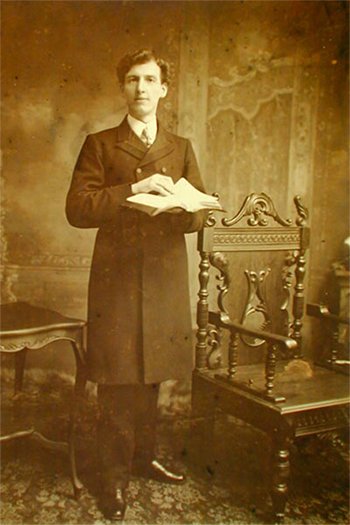
Evan Roberts: The Reluctant Catalyst
Evan Roberts was not a trained theologian. He was a former coal miner and blacksmith’s apprentice who had spent eleven years praying for a “visitation.” His message was strikingly simple, summarized in four points:
- Confess all known sin.
- Remove anything doubtful from your life.
- Obey the Spirit promptly.
- Publicly confess Christ.
The Impact on Society
The Welsh Revival was unique because it lacked the formal organization of previous awakenings. There were no hymnals, no committees, and often no pre-planned sermons. The results were quantifiable:
- The Judiciary: Judges were presented with white gloves because there were no cases to try; the crime rate plummeted.
- The Mines: Legend has it that the pit ponies in the coal mines stopped working because they no longer understood the miners’ commands, as the miners had stopped using profanity.
- The Church: Within six months, an estimated 100,000 converts joined the churches of Wales.
III. The American Connection: Azusa Street and Beyond
The news from Wales acted as a catalyst for North America. In Los Angeles, a small prayer group led by William J. Seymour, the son of former slaves, began meeting in a dilapidated building on Azusa Street.
The Birth of Modern Pentecostalism (1906)
The Azusa Street Revival is often cited as the most significant religious event of the 20th century. It was characterized by:
- Racial Integration: In an era of Jim Crow laws, Azusa Street was a “color-blind” movement. Frank Bartleman, a participant, famously wrote, “The color line was washed away in the blood.”
- Glossolalia (Speaking in Tongues): Participants believed they were experiencing a literal “Book of Acts” visitation, providing them with the “apostolic signs” needed for global missions.
- Global Export: Because Los Angeles was a major port city, visitors from across the world attended the meetings and took the “fire” back to their home countries, including Norway, India, and China.
A Global Survey: The Awakening Across Continents
The Sixth Great Awakening was truly the first “globalized” revival, aided by the telegraph and steamship.
- Africa: The Boer Prisoner-of-War Camps
The revival in South Africa began in the most unlikely of places: British concentration camps during the Boer War. Captured soldiers, stripped of their homes and dignity, turned to prayer. When the war ended in 1902, these men returned to their farms as amateur evangelists. This paved the way for Gypsy Smith’s massive crusades in 1904, where thousands were converted in Cape Town and Johannesburg.
- Asia: The Taisho Revival in Japan
In 1900, the “Taisho” revival saw the Japanese church double in size. This was bolstered by the work of R.A. Torrey and Charles Alexander, whose “Glory Songs” became the soundtrack of Asian revivalism. In India, the Mukti Revival (led by Pandita Ramabai) saw similar phenomena among young women and orphans, marked by deep repentance and spiritual ecstasies.
- Scandinavia and Europe
In Norway, Thomas Ball Barratt, a Methodist minister, visited the U.S. and returned to Oslo with the Pentecostal message. The fire spread rapidly through Sweden, Denmark, and eventually into the fledgling underground churches of Russia. Even in the face of the Orthodox Church’s dominance, “Stundist” (Bible study) groups flourished, marking a spiritual awakening that preceded the political upheaval of the 1917 Revolution.
- Australasia
The 1902 meetings in Melbourne by Torrey and Alexander are often cited as the spark that ignited the prayer movements in Wales. Over 2,000 prayer circles were formed in suburban Melbourne, creating a spiritual vacuum that seemed to “pull” the revival into existence.
The Socio-Political Impact: More Than Just Religion
The Sixth Great Awakening did not occur in a vacuum. It had profound effects on the social fabric of the early 20th century.
Labor and Economy
In areas hit by the revival, the work ethic improved significantly. Employers noted a decrease in absenteeism (often due to the decline in alcoholism) and an increase in honesty regarding debts and taxes.
The Role of Women
The Awakening provided a platform for women that the traditional ecclesiastical structures of the time did not. Because the movement emphasized the “gifts of the Spirit” over formal ordination, women like Pandita Ramabai, Maria Woodworth-Etter, and Florence Crawford became prominent leaders, preachers, and organizers.
Education and Missions
This period saw the founding of dozens of Bible colleges (such as BIOLA and Moody Bible Institute) and the launch of thousands of missionaries. These missionaries didn’t just bring the Gospel; they brought modern medicine, literacy programs, and agricultural techniques to the developing world.
Critical Perspectives and Challenges
No movement is without its detractors. The Sixth Great Awakening faced significant pushback from both secular and religious corners.
- The “Excesses” Critique: Traditional denominations were often horrified by the emotionalism of the revivals. Prostrations, “holy laughter,” and speaking in tongues were labeled as hysteria or even demonic by some theologians.
- The Institutional Rift: The inability of mainstream denominations to incorporate the Pentecostal experience led to the formation of new denominations, such as the Assemblies of God (1914) and the Church of God in Christ. This created a lasting fracture in Protestantism.
- The Cessationism Debate: The revival forced a theological showdown over whether the miraculous gifts of the New Testament had “ceased” with the death of the apostles or were intended for all time.
VII. The Legacy: From 1904 to the Modern Day
One hundred years later, the “aftershocks” of this awakening are the dominant feature of the global religious landscape.
The Rise of the “Global South”
The seeds planted in 1904 in Africa, South America, and Asia have grown into the largest Christian communities in the world. Pentecostalism and Charismatic Christianity—direct descendants of this Awakening—now claim over 600 million adherents globally.
Ecumenical Impact
While the initial revival caused splits, it eventually led to the “Charismatic Renewal” of the 1960s and 70s, where these experiences moved back into the Catholic, Anglican, and Lutheran churches, fostering a new kind of trans-denominational unity.
Summary of Key Figures and Events
| Figure | Region | Key Contribution |
| Evan Roberts | Wales | Sparked the 1904 Welsh Revival; focused on prayer. |
| William J. Seymour | USA | Led the Azusa Street Revival; integrated races. |
| Pandita Ramabai | India | Led the Mukti Revival; empowered women/orphans. |
| R.A. Torrey | Australia/UK | Intellectualized revival; emphasized prayer/fasting. |
| T.B. Barratt | Norway | Brought the Pentecostal message to Europe. |
VIII. Conclusion: Why the Sixth Awakening Still Matters
The Sixth Great Awakening reminds us that history is often moved not by the powerful or the wealthy, but by localized groups of people possessed by a singular vision. It bridged the gap between the traditionalism of the 19th century and the experiential spirituality of the 21st.
For the modern reader, the Awakening serves as a case study in how social change, media (the reporting of the revival), and spiritual hunger can converge to change the course of global history. It was a movement that started in the coal mines of Wales and the slums of Los Angeles and ended by rewriting the religious map of the world.
For Further Study
Primary Historical Archives
- The Azusa Street Project: http://www.azusastreet.org/ – A comprehensive archive of the 1906 revival, including original newspaper clippings and photographs.
- The Welsh Revival (National Library of Wales): https://www.library.wales/ – Search for “Evan Roberts” to find digitized diaries and contemporary accounts.
Academic and Research Institutions
- The Flower Pentecostal Heritage Center: https://ifphc.org/ – One of the largest repositories of Pentecostal and Holiness history in the world.
- Pew Research Center (Religion & Public Life): https://www.pewresearch.org/religion/ – Excellent for understanding the modern demographic legacy of the Pentecostal movement.
Specialized Topics
- The Biography of Pandita Ramabai: https://www.christianitytoday.com/history/people/missionaries/pandita-ramabai.html – Context on the Indian expression of the Awakening.
- CCEL (Christian Classics Ethereal Library): https://www.ccel.org/ – For reading the original works of John Wesley and Charles Finney regarding sanctification.
- Dictionary of African Christian Biography (DACB): https://dacb.org/ – Crucial for researching the Boer revival and early African Pentecostal leaders.