

Revivals and Renewal Movements Before 1700
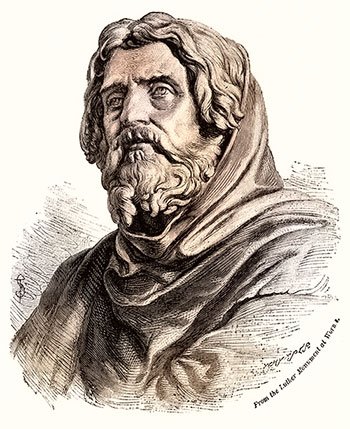
Peter Waldo
1. Introduction: Reimagining the History of Revival
The historiographical landscape of Christian renewal has long been dominated by the towering peaks of the eighteenth century. The First Great Awakening in the American colonies and the Evangelical Revival in Britain, led by figures such as Jonathan Edwards, George Whitefield, and John Wesley, are frequently depicted as the genesis of revivalism—the moment when a dormant, formalistic Christendom was suddenly electrified by the shock of the new birth.
This periodization, while convenient, is historically deficient. It suggests that the phenomenon of revival—defined here as a distinct, intensified period of spiritual awakening characterized by deep conviction of sin, a return to apostolic norms, lay mobilization, and a tangible sense of the immediate presence of God—was a modern invention.
A rigorous examination of the historical record, utilizing the chronicles of the early church, medieval monastic records, and the detailed session books of the seventeenth century, reveals a different reality. The “Great Awakenings” were not isolated supernatural events but the conflagration of kindling that had been gathering for over a millennium.
From the Celtic monastic missions of the sixth century to the sacramental fervor of the Scottish Covenanters, the pre-1700 era is punctuated by movements that bear the unique marks of genuine revival.
This report provides an exhaustive analysis of these movements. It argues that the history of the church is not merely a history of institutional solidification but of Holy Spirit interruption—recurring moments where the “subterranean fire” of the Spirit broke through the crust of ecclesiastical structure.
By tracing the lineage of renewal from the Patristic era through the Medieval “survivalist” movements, the Radical Reformation, the Catholic internal missions, and the Puritan-Pietist axis, we demonstrate that the era of revival did not begin at Northampton in 1734, but was a continuous, pulsating artery of Christian history.
2. The Patristic and Celtic Foundations (200–900 AD)
Long before the concept of “revival” was formalized in Protestant theology, the early and medieval church experienced waves of expansion and renewal that were clearly mass awakenings. These movements were often missionary in nature, yet they involved the fundamental revival dynamic: the restoration of an apparent “golden age” of apostolic power and purity.
2.1 The Early Expansion and the “Great Church” (200–250)
The third century witnessed a phenomenon that can arguably be described as the first mass revival in post-apostolic history. Between 200 and 249 AD, despite intermittent persecution, thousands flocked into the churches throughout the Roman Empire.1 This was not merely demographic growth but a spiritual movement characterized by rigorous catechesis and moral transformation.
The “revival” quality of this period is evident in the willingness of converts to endure martyrdom, a test of sincerity that purged nominalism from the community. The rapid growth during the “Long Peace” (c. 211–250) suggests a spiritual atmosphere where the Christian message resonated with a unique, awakening power among the pagan population, offering a stark contrast to the decaying civic cults of Rome.
2.2 Patrick and the Evangelization of Ireland (461–490)
The mission of St. Patrick to Ireland represents a distinct model of “missionary revival.” Operating outside the formal bounds of the Roman imperial church structure, Patrick’s ministry was charismatic and confrontational. He engaged in “power encounters” with Druidic religion, but his lasting legacy was the establishment of a localized, monastic Christianity that permeated the tribal structure of Irish society.
Historical records indicate that “thousands were converted, baptized, and set free from the power of heathenism”.1 This was a mass movement of the Holy Spirit that transformed the cultural landscape of an entire island within a single generation. The Irish church that emerged was characterized by an intense asceticism and a heavy emphasis on scripture memorization, traits that would define later renewal movements.
2.3 Columba and the Iona Mission (c. 563)
The revival fire ignited in Ireland crossed the Irish Sea with Columba, who established the monastery at Iona around 563 AD. This mission to the Picts and Scots was a strategic spiritual campaign. Iona functioned not just as a retreat but as a “revival center”—a training ground for missionary monks who fanned out across Scotland and northern England.
The Columban mission saw “many miracles and founded several churches in the Hebrides”.1 This movement is crucial because it established a model of itinerant revivalism. The monks of Iona did not wait for the people to come to the cathedral; they went to the people, preaching in the open air and establishing “cells” of believers. This anticipated the itinerant strategies of the Lollards, the friars, and much later, the Methodists.
3. Medieval Monastic and Mendicant Renewals (900–1400)
As the church became increasingly institutionalized and entangled with feudal power structures in the High Middle Ages, revival movements took the form of monastic reform and, eventually, the rise of the mendicant orders. These were attempts to bypass the corruption of the secular clergy and return to the vita apostolica (apostolic life).
3.1 Cluny and the Cistercians: The Institutional Awakening
In the tenth century, the founding of the Abbey of Cluny brought a “renewal and reformation into the Western church”.1 The Cluniac reform was a revival of liturgy and discipline, restoring the dignity of worship and the independence of the church from secular lords. While largely institutional, it raised the spiritual temperature of Western Christendom, leading to the Gregorian Reforms.
However, as Cluny grew wealthy, a new wave of revival was needed. The Cistercians, led by Bernard of Clairvaux in the twelfth century, represented a “revival of the heart.” Bernard’s preaching, deeply affective and centered on the love of Christ, sparked a massive influx of vocations. The Cistercians sought the “wilderness” to encounter God, and their austere spirituality influenced the later Devotio Moderna.
3.2 The Friars: Francis, Dominic, and Antony
The thirteenth century witnessed an explosion of popular revivalism through the mendicant orders. Unlike the monks who retreated from the world, the friars invaded the growing cities.
- Francis of Assisi (1208): Francis’s movement was a radical return to gospel poverty. His preaching was not theological treatises but calls to repentance, accompanied by “occasional signs and wonders”.1 The Franciscan movement swept through Italy and beyond, awakening the laity to the possibility of a holy life outside the cloister.
- Dominic and the Preachers: Dominic founded the Order of Preachers to combat heresy through intellectual rigor and apostolic poverty. He “experienced revival phenomena during his preaching” 1, demonstrating that intellectual depth and spiritual fire were not mutually exclusive.
- Antony of Padua (1231): Perhaps the most “revivalist” of the early friars, Antony attracted crowds of up to 30,000 people. His preaching in Padua resulted in “massive numbers of people repenting”.1 Contemporary accounts describe shops closing, vendettas ending, and a wave of moral restitution sweeping the city—classic markers of a city-wide revival.
3.3 Vincent Ferrer: The Angel of Judgment (1368–1419)
In the late fourteenth century, the Dominican Vincent Ferrer conducted massive itinerant campaigns across Spain, France, and Italy. Preaching on the apocalypse and the need for immediate repentance, he drew “enormous crowds” and was credited with “winning thousands of Jews and Muslims to faith in Christ”.1
His ministry was charismatic, attended by “signs and wonders,” and functioned as a spiritual counter-weight to the chaos of the Western Schism.
4. The Pre-Reformation Subterranean Stream (1170–1500)
Parallel to the sanctioned renewal of the friars, a more radical stream of revivalism emerged—one that challenged the sacerdotal authority of the church and centered on the vernacular Word. These movements were the direct precursors to the Protestant Reformation.
4.1 The Waldensians: The Revival of the Word (1170s–)
The Waldensian movement, ignited by the conversion of the wealthy merchant Peter Waldo in Lyon (c. 1173), was fundamentally a lay Bible revival. Waldo, struck by the call to apostolic poverty, commissioned translations of the Gospels and began to preach in the streets.2
The Mechanism of Portable Revival
The Waldensian genius was their mobile ecclesiology. The “Poor of Lyon” traveled two by two, wearing rough sandals, preaching a message of repentance and strict adherence to the Sermon on the Mount.3 Because they were forbidden to preach by the hierarchy, they went underground.
Their “revival” was sustained not by public assemblies but by secret family catechism. They memorized vast portions of scripture, transforming their minds into portable libraries of the Word.
- Spiritual Characteristics: They rejected oaths, purgatory, and prayers for the dead. They emphasized that the efficacy of the sacraments depended on the holiness of the minister—a direct challenge to the clerical system.5
- Survival: Despite centuries of inquisitorial suppression, this “church within a church” survived in the Cottian Alps, maintaining a spiritual vitality that would eventually merge with the Genevan Reformation in 1532.2
4.2 The Lollards: The English Awakening (1380s–)
In England, the work of John Wycliffe at Oxford sparked a movement that bridged the gap between the academy and the street. The Lollards (“mumblers” or “chanters”) were the shock troops of a vernacular revival.7
Lay Literacy as Spiritual Power
The centerpiece of the Lollard revival was the Wycliffite Bible. For the first time, the English artisan class had access to scripture. They formed “reading circles”—early conventicles—where the Bible was read aloud and discussed.9 This created a culture of “personal responsibility” for salvation, bypassing the mediation of the priest.
- The Twelve Conclusions (1395): The Lollards posted their manifesto on the doors of Westminster Hall and St. Paul’s, attacking clerical celibacy, transubstantiation, and pilgrimages as “idolatry”.7
- Impact: Though driven underground after the failure of Oldcastle’s rebellion (1414), Lollardy survived as a “hidden revival” among the merchant classes, providing the fertile soil in which the English Reformation would later take root.9
4.3 The Hussites: The Bohemian Explosion (1400–1415)
Bohemia in the fourteenth century was a hotbed of spiritual unrest. Preachers like Conrad Waldhauser and Jan Milic of Kromeriz had already laid the groundwork, preaching against simony and leading prostitutes to repentance.1 Jan Milic even served the Eucharist daily to the laity, a radical innovation that centered the revival on the frequency of communion.
Jan Hus and the Bethlehem Chapel
The revival coalesced around Jan Hus and the Bethlehem Chapel in Prague, a venue specifically built for vernacular preaching. Hus’s sermons drew thousands, attacking the moral corruption of the clergy and calling for a return to the primitive church.12
- Utraquism: The revival’s defining demand was the chalice for the laity (sub utraque specie). This was a theological revolution: it asserted the spiritual equality of the believer with the priest. The “chalice” became the symbol of a national spiritual awakening that defeated five papal crusades.14
4.4 Savonarola: The Apocalyptic Revival of Florence (1490–1498)
In the cultural heart of the Renaissance, the Dominican friar Girolamo Savonarola ignited a revival that was fierce, apocalyptic, and morally rigorous.
The Prophet of Doom
Savonarola preached that the church would be “scourged and renewed.” His sermons in the Duomo of Florence were terrifyingly effective. Contemporary accounts describe the entire city being gripped by a “holy terror”; women cast off their jewels, and bankers returned usurious profits.16
- The Bonfire of the Vanities (1497): The revival culminated in the bruciamenti. Bands of “boys’ brigades” (young converts organized by Savonarola) went door-to-door collecting “vanities”—wigs, masks, lewd books, and mirrors. These were burned in a massive pyre in the Piazza della Signoria, a dramatic public purging of sin.17
While Savonarola was eventually executed, his movement demonstrated the explosive potential of prophetic preaching to transform a city’s moral climate.
5. The Radical Reformation as Revival (1525–1600)
While the Magisterial Reformation reorganized the church’s doctrine, the Radical Reformation (Anabaptism) functioned as a charismatic revival movement, emphasizing the immediate experience of the “New Birth.”
The Magisterial Reformation was the Protestant movement, led by figures like Luther, Calvin, and Zwingli, that reformed churches with the support and authority of secular rulers (magistrates, princes, city councils), creating state-linked churches.
The Radical Reformation went further by seeking separation from state power and embracing adherence to Biblical practices as well as Biblical theology.
5.1 The Swiss Brethren: The Baptism of Regeneration (1525)
On January 21, 1525, a small group of reformers in Zurich, frustrated with Zwingli’s gradualism, took the radical step of baptizing one another. When George Blaurock asked Conrad Grebel to baptize him, it was an act of “revival”—a re-constitution of the church based on voluntary, conscious confession.19
The Theology of Inner Light
Unlike the forensic justification of the Lutherans, Anabaptists emphasized ontological regeneration. They spoke of the “inner Word” and the power of the Spirit to transform the nature of the believer. Salvation was a tangible experience of being “born again” (regeneration), which necessarily resulted in a new life of discipleship.21
5.2 The Hutterite “Golden Period” (1565–1592)
In Moravia, the Anabaptist impulse evolved into a communal revival under Jacob Hutter. The Hutterites practiced the “community of goods” (Acts 2:44), surrendering all private property.
- Communal Sanctification: The “Golden Period” was a time of intense spiritual flourishing. The Bruderhofs (community farms) became refuges for thousands of converts from across Europe. Life was strictly regulated by the “Rule of Christ,” creating a society where spiritual discipline and economic solidarity were fused. This period represents one of the most successful experiments in communal Christian living in history.24
6. The Catholic Interior Mission (1600–1660)
The Counter-Reformation was not solely a reactionary movement; it contained a vibrant stream of “revivalism” aimed at re-converting the nominal Catholic populace. This movement, often called the “Internal Mission,” utilized itinerant preaching and emotional appeals similar to Protestant revivalists.
6.1 Francis de Sales and the Chablais Mission (1594–1598)
Francis de Sales, later Bishop of Geneva, undertook a perilous mission to the Chablais region of Savoy, which had turned Calvinist. His approach was a “revival of gentleness.”
- Methods: Facing initial hostility, Francis used the printing press, sliding leaflets (the first “tracts”) under doors. He engaged in patient, one-on-one dialogue and emphasized the love of God.
- Results: Over four years, his persistent, loving witness and the forty-hour devotion (Quarant’ore) celebrations brought nearly the entire region (estimates of 70,000 people) back to the Catholic faith.26
6.2 Vincent de Paul and the Mission to the Peasantry (1617–1660)
Vincent de Paul discovered the spiritual destitution of the French peasantry in 1617 at Folleville. Called to the bedside of a dying man who had made sacrilegious confessions for years, Vincent realized the rural poor were spiritually abandoned.
- The General Confession: Vincent preached a sermon on the necessity of a “General Confession”—a complete review of one’s life. The response was a “revival”: villagers flocked to the church, weeping and seeking absolution.
- The Lazarists: To sustain this, Vincent founded the Congregation of the Mission (Lazarists/Vincentians). These priests conducted “missions” in rural parishes, staying for weeks to preach daily sermons, catechize children, and hear confessions, effectively “reviving” the parish life before moving on.29
7. The Scottish Fire: The Presbyterian Pattern (1596–1640)
In Scotland, a unique form of revivalism developed that linked the preaching of the law with the administration of the Lord’s Supper. This “Communion Season” revivalism would become the primary vehicle for the later Great Awakenings.
7.1 The 1596 General Assembly
The precursor to the seventeenth-century revivals was the General Assembly of 1596. John Davidson of Prestonpans proposed a “renewal of the covenant.” The 400 ministers present raised their hands in a solemn vow of repentance, and the meeting dissolved into weeping. This “covenant renewal” spread to the presbyteries and parishes, setting a pattern for national repentance.1
7.2 The Stewarton Revival (1625–1630)
Under the ministry of David Dickson at Irvine, a revival broke out that spread to the parish of Stewarton. This revival was controversial for its physical manifestations, derisively called the “Stewarton Sickness.”
- The “Sickness”: Under Dickson’s preaching of the terrors of the law, people would fall down, swoon, or cry out in agony of soul. Critics dismissed it as hysteria, but Dickson defended it as the pangs of the new birth. This established the “law-work”—the necessity of deep conviction before conversion—as a hallmark of Scottish divinity.34
7.3 The Kirk of Shotts (1630)
The most iconic event of Scottish revivalism occurred at the Kirk of Shotts on June 21, 1630. Following a communion service, a young licentiate named John Livingstone was asked to preach the Monday thanksgiving sermon.
- The Sermon in the Rain: Preaching in the open air to a vast crowd, Livingstone was caught in a sudden downpour. He used the rain as a metaphor: “If you cannot endure a few drops of rain, how will you endure the fire of God’s wrath?” The Spirit fell upon the crowd, and approximately 500 people were converted on the spot. This event canonized the “Monday Thanksgiving” as a vital part of the Communion Season.37
8. The Ulster Awakening (1625–1640)
Simultaneously, across the Irish Sea, Scottish settlers in Ulster experienced a revival that would eventually seed the American Great Awakening.
8.1 The Six Mile Water Revival (1625)
This revival began with the unlikely figure of James Glendinning, a minister of “limited gifts” and eccentric manner. At Oldstone, Glendinning preached nothing but the wrath of God. The rough settlers, many fugitives or debtors, were struck with terror.
- Physical Manifestations: Men were “slain in the spirit,” falling as if dead. Dozens were carried out of meetings.
- Pastoral Management: Robert Blair and other ministers stepped in to balance the law with the gospel. They organized “Monthly Meetings” at Antrim—gatherings for scripture study and prayer that rotated through the region.
- Significance: These monthly meetings created a network of “prayer societies” that empowered the laity. When the ministers were later persecuted and ejected, the revival continued through these lay societies. This “society” structure was exported to America by the Scots-Irish, influencing the “Log Colleges” of Pennsylvania.40
8.2 Migration and the Eagle Wing
In 1636, persecuted ministers Blair and Livingstone attempted to sail to America on the Eagle Wing to found a Presbyterian colony. Though weather forced them back, this attempt prefigured the massive Scots-Irish migration of 1718, which would transplant the fire of the Six Mile Water revival to the American frontier.44
9. The Puritan Pastoral Revival (1640–1690)
English Puritanism produced a more systematic, catechetical form of revival.
9.1 Richard Baxter at Kidderminster (1641–1660)
Richard Baxter’s ministry at Kidderminster is the gold standard of pastoral evangelism. Through his discipline of personal catechizing, he transformed a town of ignorant ribbon-weavers into a model Christian community.
- Family Worship: Baxter noted that when he arrived, hardly one family in a street worshipped God; when he left, there were streets where every family did so. He catechized 800 families a year, personalizing the revival for every household. His book The Reformed Pastor (1656) argued that revival comes through the relentless application of truth to individual souls.46
9.2 George Fox and the Quaker Explosion (1647–1660)
In 1647, George Fox began his ministry, preaching that “Christ has come to teach his people himself.” The rise of the Quakers (Society of Friends) was a revival of radical pneumaticism.
- The Power: Early Quaker meetings were marked by trembling (“quaking”) under the power of the Lord. It was a mass movement of the Spirit that swept through the North of England, gathering thousands who were disillusioned with formal Puritanism. By 1660, despite brutal persecution, Quakers had become a major spiritual force.1
9.3 Societies for the Reformation of Manners (1690s)
In the 1690s, a different type of “revival” emerged in London: a moral crusade. The “Societies for the Reformation of Manners” were formed to suppress vice (brothels, swearing, drunkenness) through legal prosecution. While legalistic, this movement mobilized thousands of laypeople in a crusade for national righteousness, bridging the gap between Puritan zeal and the philanthropic societies of the 18th century.50
10. German Pietism: The Second Reformation (1670–1700)
Following the devastation of the Thirty Years’ War, German Lutheranism fell into “dead orthodoxy.” The Pietist movement sought to revive the life of the church.
10.1 Spener and Pia Desideria (1675)
Philipp Jakob Spener’s Pia Desideria (Pious Desires) was the manifesto of this revival. He proposed the collegia pietatis—small groups within the church for Bible study and prayer.
- Ecclesiola in Ecclesia: This concept of the “little church within the church” allowed for a deeper spiritual life without schism. It encouraged the “priesthood of all believers” and the necessity of a felt “new birth”.53
10.2 Francke and the Halle Institutions
August Hermann Francke turned the University of Halle into a revival engine. He insisted on a Bußkampf (struggle of repentance) leading to a decisive conversion. The Halle institutions (orphanage, publishing house) demonstrated that revival leads to social action and global mission. Halle Pietism would directly influence the Danish-Halle mission to India and the American revivals through Cotton Mather.56
11. The American First Fruits: The Harvests of Stoddard (1679–1720)
In New England, the “Puritan Way” was in decline. The response was a series of “harvests” that anticipated the Great Awakening.
11.1 Solomon Stoddard’s Five Harvests
Solomon Stoddard, pastor at Northampton, MA, recorded five distinct revivals: 1679, 1683, 1696, 1712, and 1718.
- The Converting Ordinance: Stoddard controversially opened the Lord’s Supper to all baptized moral members, believing the sacrament itself could convert the soul. He preached hellfire and the necessity of conversion. His “harvests” proved that revival could be a recurring, expected feature of church life.58
11.2 Cotton Mather and the Transatlantic Network
Cotton Mather in Boston worked to promote revival through “Societies for the Suppression of Disorders” and by documenting the “Magnalia” (great works) of God in New England’s history. Crucially, Mather corresponded with Francke in Halle, linking the American Puritan revival with German Pietism. This transatlantic network of intelligence paved the way for the international scope of the 18th-century awakening.61
12. Conclusion
The historical record is clear: the fire of revival did not strike a cold earth in the 1730s. It had been burning in the hearths of the Waldensian cottages, the Bohemian chapels, the Scottish glens, and the German conventicles for centuries.
These pre-1700 movements reveal the anatomy of revival:
- The Primacy of the Word: From the Wycliffite Bible to Spener’s collegia, revival begins when the laity access scripture.
- The Necessity of the New Birth: Whether framed as Anabaptist regeneration, Pietist conversion, or Puritan effectual calling, the demand for experienced salvation is constant.
- Structure for Sustenance: Revival fire is sustained by structure—the Lollard reading circle, the Methodist class meeting, the Pietist collegium, the Presbyterian society.
The “Great Awakening” was, therefore, not a beginning but a convergence—a moment when the streams of European Pietism, Scottish Presbyterianism, and Puritan pastoralism flowed together into a mighty river that would reshape the modern world.
Comparative Timeline of Major Pre-1700 Revivals
| Period | Revival Movement | Location | Key Characteristic |
| 1170– | Waldensians | France/Italy | Lay preaching, vernacular scripture memorization |
| 1200– | Friars (Franciscan) | Italy/Europe | Apostolic poverty, popular preaching |
| 1380– | Lollards | England | “Poor Priests,” English Bible reading circles |
| 1400–15 | Hussites | Bohemia | Liturgical reform, Lay Chalice (Utraquism) |
| 1490–98 | Savonarola | Florence | Apocalyptic moralism, “Bonfire of Vanities” |
| 1525– | Anabaptists | Swiss/German | Believer’s Baptism, “New Birth,” Community |
| 1596 | Gen. Assembly | Scotland | Covenant Renewal, national repentance |
| 1617– | Vincentians | France | General Confession, rural missions |
| 1625–30 | Stewarton/Shotts | Scotland | “Sickness” (conviction), Communion Season |
| 1625– | Six Mile Water | Ulster | Prayer societies, physical manifestations |
| 1641– | Kidderminster | England | Family catechizing, town-wide transformation |
| 1647– | Quakers | England | Radical pneumaticism, “quaking” |
| 1675– | Pietism | Germany | Collegia Pietatis, “Heart Religion” |
| 1679– | Stoddard’s Harvests | New England | “Converting Ordinance,” cyclical revival |
Works cited
- Revivals before 1700, accessed on December 13, 2025, https://revival-library.org/timelines/revivals-before-1700/
- Waldensians – Wikipedia, accessed on December 13, 2025, https://en.wikipedia.org/wiki/Waldensians
- Introducing The Waldensians – Anabaptist Mennonite Network, accessed on December 13, 2025, https://amnetwork.uk/resource/introducing-the-waldensians/
- The Waldensians – Christian History Institute, accessed on December 13, 2025, https://christianhistoryinstitute.org/uploaded/50cf792d1b8717.07405771.pdf
- Waldenses | Description, History, & Beliefs – Britannica, accessed on December 13, 2025, https://www.britannica.com/topic/Waldenses
- A Waldensian Church History – Global Ministries, accessed on December 13, 2025, https://www.globalministries.org/a_waldensian_church_history/
- Lollard | English Religious Reformers & Medieval Heresy – Britannica, accessed on December 13, 2025, https://www.britannica.com/topic/Lollards
- Lollardy – Wikipedia, accessed on December 13, 2025, https://en.wikipedia.org/wiki/Lollardy
- Introducing The Lollards – Anabaptist Mennonite Network, accessed on December 13, 2025, https://amnetwork.uk/resource/introducing-the-lollards/
- Lollard writings – Cambridge Core – Journals & Books Online, accessed on December 13, 2025, https://resolve.cambridge.org/core/services/aop-cambridge-core/content/view/DC66AFD2E385B8DD24D0A8ED951F9149/9781139002523c8_p111-122_CBO.pdf/lollard_writings.pdf
- Bohemian Reformation – Wikipedia, accessed on December 13, 2025, https://en.wikipedia.org/wiki/Bohemian_Reformation
- Jan Hus – Publishing Services, accessed on December 13, 2025, https://pubs.lib.umn.edu/index.php/cey/article/download/5027/3264/26930
- Jan Hus: A man on a mission – Ministry Magazine, accessed on December 13, 2025, https://www.ministrymagazine.org/archive/2015/11/jan-hus-a-man-on-a-mission
- Jan Hus – Wikipedia, accessed on December 13, 2025, https://en.wikipedia.org/wiki/Jan_Hus
- Jan Hus Commemoration, 600 Years Death_Moravian Hill_UP 5 May 2015, accessed on December 13, 2025, https://mzv.gov.cz/file/1481944/Jan_Hus_Commemoration__600_Years_Death_Moravian_Hill_UP_5_May_2015.pdf
- Girolamo Savonarola 1452-1498 – Revival Library, accessed on December 13, 2025, https://revival-library.org/heroes/girolamo-savonarola/
- Savonarola | Early Life, Reformation & Death – Study.com, accessed on December 13, 2025, https://study.com/learn/lesson/savonarola-bio-death-overview.html
- Savonarola in Florence: Visions of the Apocalypse – Through Eternity Tours, accessed on December 13, 2025, https://www.througheternity.com/en/blog/history/savonarola-in-florence-visions-of-the-apocalypse.html
- Truth Is Immortal: On the Five Hundred Year Anniversary of the Anabaptists | Paul Chappell, accessed on December 13, 2025, https://paulchappell.com/2025/10/09/on-the-500-year-anniversary-of-the-anabaptists/
- Introducing the Anabaptists, accessed on December 13, 2025, https://amnetwork.uk/resource/introducing-the-anabaptists/
- Anabaptist theology – Wikipedia, accessed on December 13, 2025, https://en.wikipedia.org/wiki/Anabaptist_theology
- You Must Be Born Again | Anabaptist Resources, accessed on December 13, 2025, https://www.anabaptistresources.org/en/resources/details/332/you-must-be-born-again
- Anabaptism at 500: Renewal Through Repentance – St. Jacobs Mennonite Church, accessed on December 13, 2025, https://sjmc.on.ca/anabaptism-at-500-renewal-through-repentance/
- Hutterite History Overview, accessed on December 13, 2025, https://hutterites.org/history/hutterite-history-overview/
- Brethren and Mennonite Traditions (Chapter 20) – The Cambridge Companion to American Protestantism, accessed on December 13, 2025, https://www.cambridge.org/core/books/cambridge-companion-to-american-protestantism/brethren-and-mennonite-traditions/DF76261F47525F87C6EF8A911BB0AC9C
- ST FRANCIS DE SALES – MSFS Dibrugarh, accessed on December 13, 2025, https://www.msfsdibrugarh.com/page/29/shows
- Francis de Sales – Archdiocese of New Orleans, accessed on December 13, 2025, https://nolacatholic.org/st-francis-de-sales
- Advice from the Guy Who Makes Converts | Catholic Answers Magazine, accessed on December 13, 2025, https://www.catholic.com/magazine/online-edition/advice-from-the-guy-who-makes-converts
- Vincent de Paul—a Saint for Today | Sisters of Charity of New York, accessed on December 13, 2025, https://scny.org/vincent-de-paul-a-saint-for-today/
- Vincent de Paul – Champion of True Charity | Heralds of the Gospel Magazine, accessed on December 13, 2025, https://catholicmagazine.news/st-vincent-de-paul-champion-of-true-charity/
- The Congregation of the Mission: Evangelization and Service to the Poor – FAMVIN NewsEN, accessed on December 13, 2025, https://famvin.org/en/2025/01/22/the-congregation-of-the-mission-evangelization-and-service-to-the-poor/
- Parish Missions – EWTN, accessed on December 13, 2025, https://www.ewtn.com/catholicism/library/parish-missions-12817
- Touched By The Fire: Presbyterians and Revival – Theology Matters, accessed on December 13, 2025, https://www.theologymatters.com/wp-content/uploads/2020/03/00Vol6-No2-TM.pdf
- Church In Scotland 1625 1929 – UK Wells, accessed on December 13, 2025, https://ukwells.org/explore/revival/church-in-scotland-1625-1929
- 1625 Stewarton Revival (Irvine) – BEAUTIFUL FEETBEAUTIFUL FEET, accessed on December 13, 2025, https://romans1015.com/stewarton/
- David Dickson (minister) – Wikipedia, accessed on December 13, 2025, https://en.wikipedia.org/wiki/David_Dickson_(minister)
- The Kirk of Shotts Revival – Pilgrims Covenant Church, accessed on December 13, 2025, https://www.pccmonroe.org/shotts.html
- Revival at Shotts 1630, accessed on December 13, 2025, https://revival-library.org/histories/1630-revival-at-shotts/
- John Livingstone (minister) – Wikipedia, accessed on December 13, 2025, https://en.wikipedia.org/wiki/John_Livingstone_(minister)
- 1625 Six Mile Water Revival, accessed on December 13, 2025, https://revival-library.org/histories/1625-six-mile-water-revival/
- Six Mile Water Revival – UK Wells, accessed on December 13, 2025, https://ukwells.org/revivalists/six-mile-water-revival
- The Rev James Glendinning had come to Ulster ca 1622 and was at the very heart of the Six Mile Water Revival in 1625. He was the incumbent of Carnmoney and a lecturer at Carrickfergus which was the centre of the English presence at that time.The Rev. Robert Blair heard Glendinning preach and concluded that he was doing so by rote, with no real fire, to a basically English congregation. Blair convinced Glendinning to remove himself to Oldstone (Muckamore) where he would be among his own, accessed on December 13, 2025, http://orrnamestudy.com/presbynire.htm
- 1625 Six Mile Water Revival – BEAUTIFUL FEETBEAUTIFUL FEET, accessed on December 13, 2025, https://romans1015.com/6-mile-water/
- Migration – Ulster Historical Foundation, accessed on December 13, 2025, https://ulsterhistoricalfoundation.com/assets/uploads/The_1718_Migration-min.pdf
- The Story of the Presbyterians in Ulster, accessed on December 13, 2025, https://discoverulsterscots.com/history-culture/story-presbyterians-ulster
- Richard Baxter – Wikipedia, accessed on December 13, 2025, https://en.wikipedia.org/wiki/Richard_Baxter
- Richard Baxter and His Gospel an article by Maurice Roberts, accessed on December 13, 2025, https://crookedfingers.livejournal.com/4366124.html
- Richard Baxter on The Importance of Hard Work – LifeCoach4God, accessed on December 13, 2025, https://lifecoach4god.life/2012/08/11/richard-baxter-on-the-importance-of-hard-work/
- The Life and Ministry of Richard Baxter, accessed on December 13, 2025, http://thirdmill.org/articles/lyn_friesen/CH.Friesen.Baxter.1.html
- Society for the Reformation of Manners – Wikipedia, accessed on December 13, 2025, https://en.wikipedia.org/wiki/Society_for_the_Reformation_of_Manners
- Reformation Necessary to Prevent Our Ruin, 1727 – Rictor Norton, accessed on December 13, 2025, https://rictornorton.co.uk/eighteen/1727ruin.htm
- Movement to Reform Manners | Research Starters – EBSCO, accessed on December 13, 2025, https://www.ebsco.com/research-starters/history/movement-reform-manners
- Collegia pietatis | German Reformation, Pietism & Charitable Societies – Britannica, accessed on December 13, 2025, https://www.britannica.com/topic/collegia-pietatis
- From the Archives: The Pia Desideria (Pious Desires) | Christian History Magazine, accessed on December 13, 2025, https://christianhistoryinstitute.org/magazine/article/pietist-archives-pia-desideria
- Pietism – Wikipedia, accessed on December 13, 2025, https://en.wikipedia.org/wiki/Pietism
- Phillip Jacob Spener’s Contribution to Protestant Ecclesiology | Dwell Community Church, accessed on December 13, 2025, https://www.dwellcc.org/essays/phillip-jacob-speners-contribution-protestant-ecclesiology
- Pietism – Encyclopedia of Greater Philadelphia, accessed on December 13, 2025, https://philadelphiaencyclopedia.org/essays/pietism/
- An Early American Revival (Jonathan Edwards) – Vance Christie, accessed on December 13, 2025, https://vancechristie.com/2015/02/20/an-early-american-revival-jonathan-edwards/
- STODDARD, SOLOMON – American Realities with Bill Youngs, accessed on December 13, 2025, https://www.americanrealities.com/stoddard-solomon.html
- A HISTORY OF AMERICAN REVIVALS by Frank G. Beardsley–Chapter 3, accessed on December 13, 2025, https://www.gospeltruth.net/Beardsley/beardsleych3.htm
- Defending-the-New-England-way-Cotton-Mathers-Exact-Mapp.pdf – Westfield State University, accessed on December 13, 2025, https://www.westfield.ma.edu/historical-journal/wp-content/uploads/2018/06/Defending-the-New-England-way-Cotton-Mathers-Exact-Mapp.pdf
- The Fact and Fiction of Cotton Mather’s Correspondence with German Pietist August Hermann Francke (2010) | Wolfgang Splitter | 5 Citations – SciSpace, accessed on December 13, 2025, https://typeset.io/papers/the-fact-and-fiction-of-cotton-mather-s-correspondence-with-3zgr6vml1e
- Piety Rationalized: Notes on Cotton Mather, Jonathan Edwards, and the Ramist Logic of Method, accessed on December 13, 2025, https://ch-ojs-tamu.tdl.org/ch/article/download/6942/6104